Infringement is not rare, it’s just hard to spot
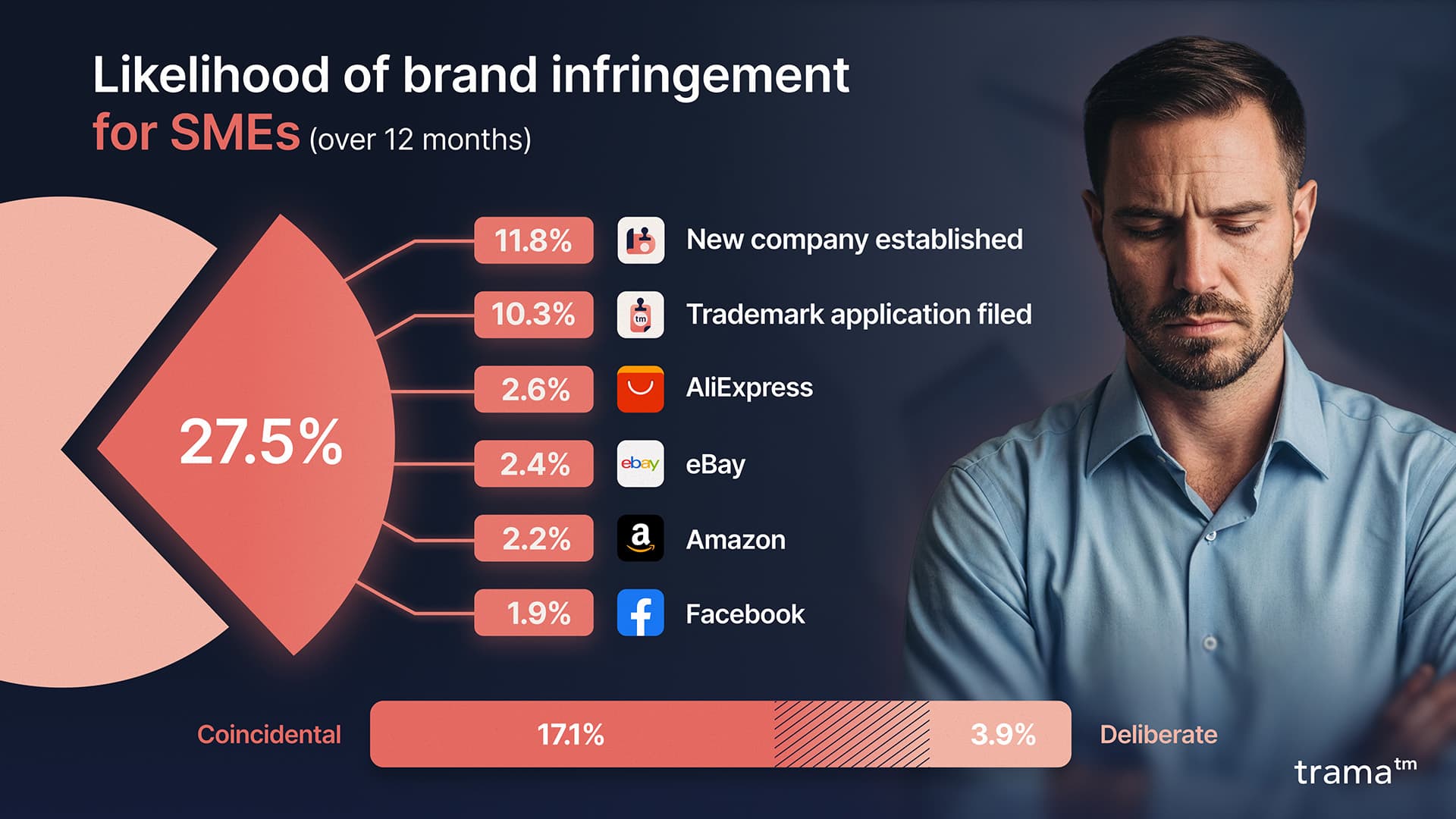
We ran a study on how often brand infringement actually affects smaller companies, and the result was consistent: 27.5% of SMEs in our sample experienced some form of it within a year, whether that's a new company registered with a near-identical name, a similar trademark filed nearby, or a knockoff listing on a marketplace or social platform. One in four clients, every year. That's a baseline rate, not an occasional exception, and it only looks rare to firms that aren't monitoring closely enough to catch it as it happens.
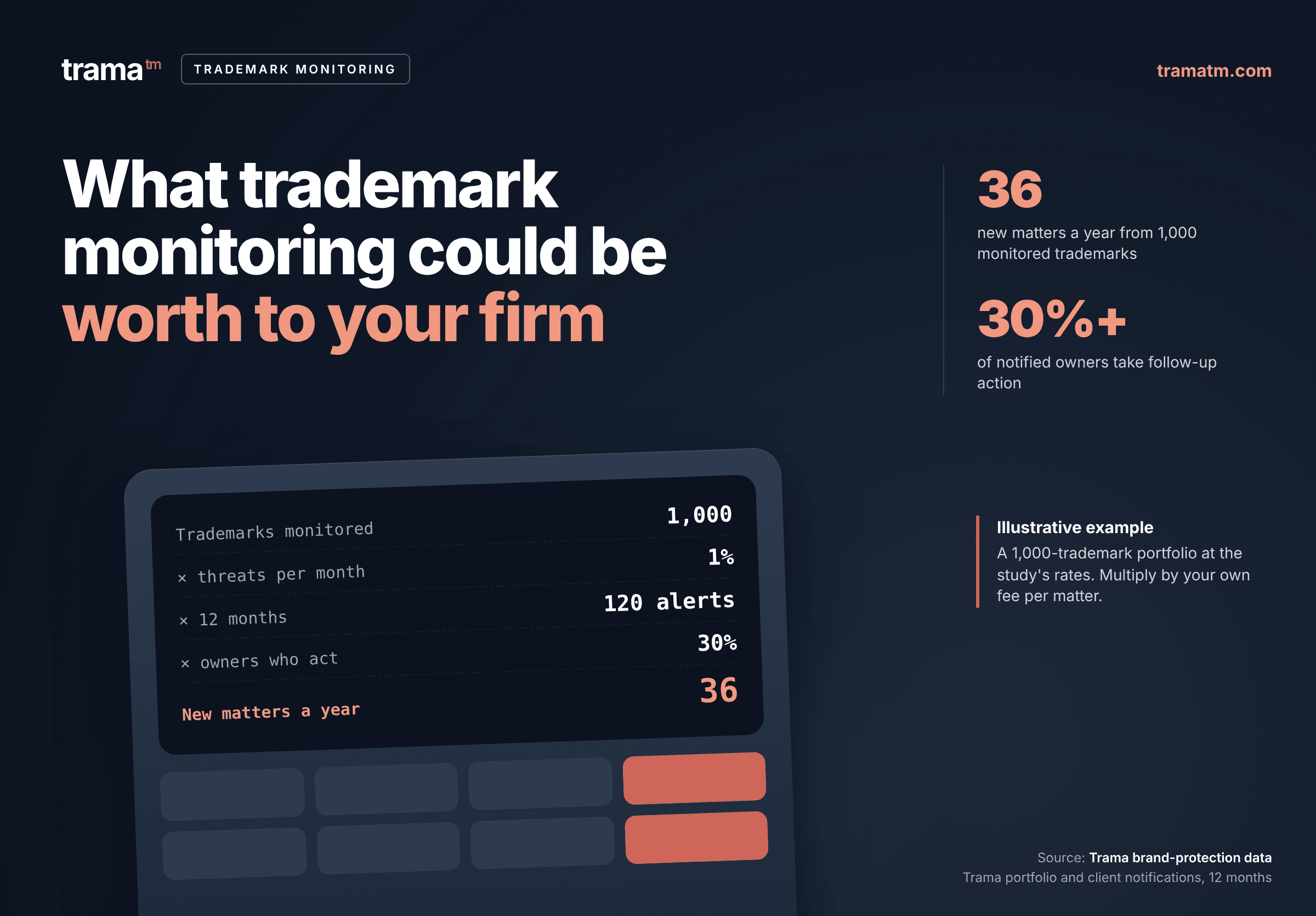
Our own portfolio shows the same pattern at closer range. Each month, roughly 1 in 100 trademarks in our portfolio surfaces something worth acting on, a competing filing or a mark close enough to warrant a response.
What happens after the threat is found is where the revenue actually sits
Finding the threat is only step one. What matters more is what clients do next, and the answer, from our own experience, is that a lot of them do want to act. More than 30% of the trademark owners we notify of a relevant threat choose to pursue some form of follow-up action against it, rather than letting it pass.
A monitoring practice isn't just a retention tool or a goodwill gesture bundled into a registration fee. It's a lead-generation engine for exactly the kind of matter your firm is already equipped to run: oppositions, cease and desist correspondence, negotiated withdrawals, except monitoring surfaces it systematically instead of waiting for a client to notice a problem on their own and call you about it.
Applying this to your own portfolio
Here's a quick way to see what this could mean for your firm: roughly 1 in 100 trademarks surfaces a relevant threat each month, and roughly 30% of affected owners choose to act on it. Apply those two rates to your own portfolio size to estimate how many matters monitoring would generate each year, then multiply that by your own opposition proceeding fee to get a rough revenue figure.
For a firm managing even a modest portfolio, that number isn't small. And without monitoring, these aren't matters you simply get to later. They go unaddressed entirely, because most clients never find out about a conflicting filing or a knockoff listing until it's already caused real damage, if they find out at all.
Build it, or partner for it, but don't skip it
Real monitoring means watching registers and online channels at once, catching a threat on one platform before it quietly spreads to three more, and knowing the difference between a case that needs a firm response and one that needs nothing at all. Get it right, and threats surface as billable matters instead of client complaints. Get it wrong, or skip it, and the revenue line simply never appears. So the real choice isn't whether to monitor. It's whether to build it or partner for it.
Working with Trama gets your clients continuous monitoring across both registers and online channels from day one, pre-assessed so your firm only steps in where it counts, at a cost structure built to make the service easy to offer rather than expensive to run. We're glad to walk through what this looks like for your client base, and help you swap the numbers above for your own. Schedule a free consultation to find out more.