The problem with "Public Domain"
When Disney's earliest Mickey Mouse cartoon entered the public domain in January 2024, headlines declared the world's most famous mouse was "free to use." But that was only one part of the story. What fewer people reported is that copyright is only one of the protections surrounding a character like Mickey Mouse.
If you are a small business owner thinking about using a famous fictional character's name or image in your branding, whether that's Mickey Mouse, the Smurfs, Sherlock Holmes, or Spider-Man, this guide is for you. Understanding where the legal lines are drawn could save you from a very expensive mistake.
First: What is intellectual property, and why does it expire?
Intellectual property (IP) law gives creators exclusive rights over their work, but only for a limited time. The idea is to reward creativity and innovation while ensuring that, eventually, society as a whole can benefit from those creations.
The main types of IP rights relevant here are:
Copyright: protects original literary and artistic works (books, films, illustrations, music)
Trademarks: protect brand identifiers (names, logos, and other signs used to sell goods or services)
In the EU and UK, copyright lasts for 70 years after the death of the author. Trademarks, on the other hand, last only 10 years at a time, but they can be renewed indefinitely, provided the owner keeps using them.
This distinction matters enormously when it comes to famous fictional characters.
Why "Public Domain" doesn't mean "Free to Use"
Let's use Mickey Mouse as the clearest example.
The 1928 short film Steamboat Willie entered the public domain on 1 January 2024. That means the specific version of Mickey Mouse that appeared in that film, his visual depiction, the story, the animation, can now be copied, adapted, and built upon freely.
But here's what the headlines missed:
1. Only that specific version is public domain. Every Mickey Mouse film, comic, and design that came after 1928 is still under copyright. The Mickey Mouse the world knows today comes from decades of subsequent works that remain fully protected.
2. The name and character are protected as trademarks. Disney holds registered trademarks for the Mickey Mouse name and image across countless product categories. Trademark protection has no automatic expiry as long as it is renewed and used. Even if every piece of Mickey Mouse copyright eventually expired, Disney's trademarks would still prevent competitors from using the character to sell products or services.
This combination of copyright and trademark protection is not unique to Disney. It applies to virtually every commercially valuable fictional character.
How trademark law treats famous character names: EU and UK perspective
How trademark law treats famous character names
Both the EU and UK apply the same core principle: a character name can only be protected as a trademark if consumers see it as a badge of commercial origin, in other words, if seeing that name on a product makes them think of a specific company.
Where the two systems agree is on the central question. Does this name tell consumers where the product comes from? If yes, it functions as a trademark and is protected. If no, it does not.
The more interesting question is what determines which side a character falls on.
Characters that belong to everyone
Some character names have been used so freely, by so many different traders, for so long, that the public no longer connects them to a single source. When that happens, the name loses its ability to function as a trademark.
The UKIPO's own example is Sherlock Holmes. So many books, films, plays, and products have featured that name over more than a century, across so many different companies, that consumers today would not assume a product bearing that name came from any particular rights holder. The name describes a character, it does not identify a brand.
The EU has reached similar conclusions. Both Pinocchio and The Jungle Book were refused trademark protection by the EUIPO on the same grounds: the names had entered common language and pointed to a story, not a commercial source.
Characters that belong to one company
The picture looks very different where a single company has consistently controlled a character and built significant commercial activity around it.
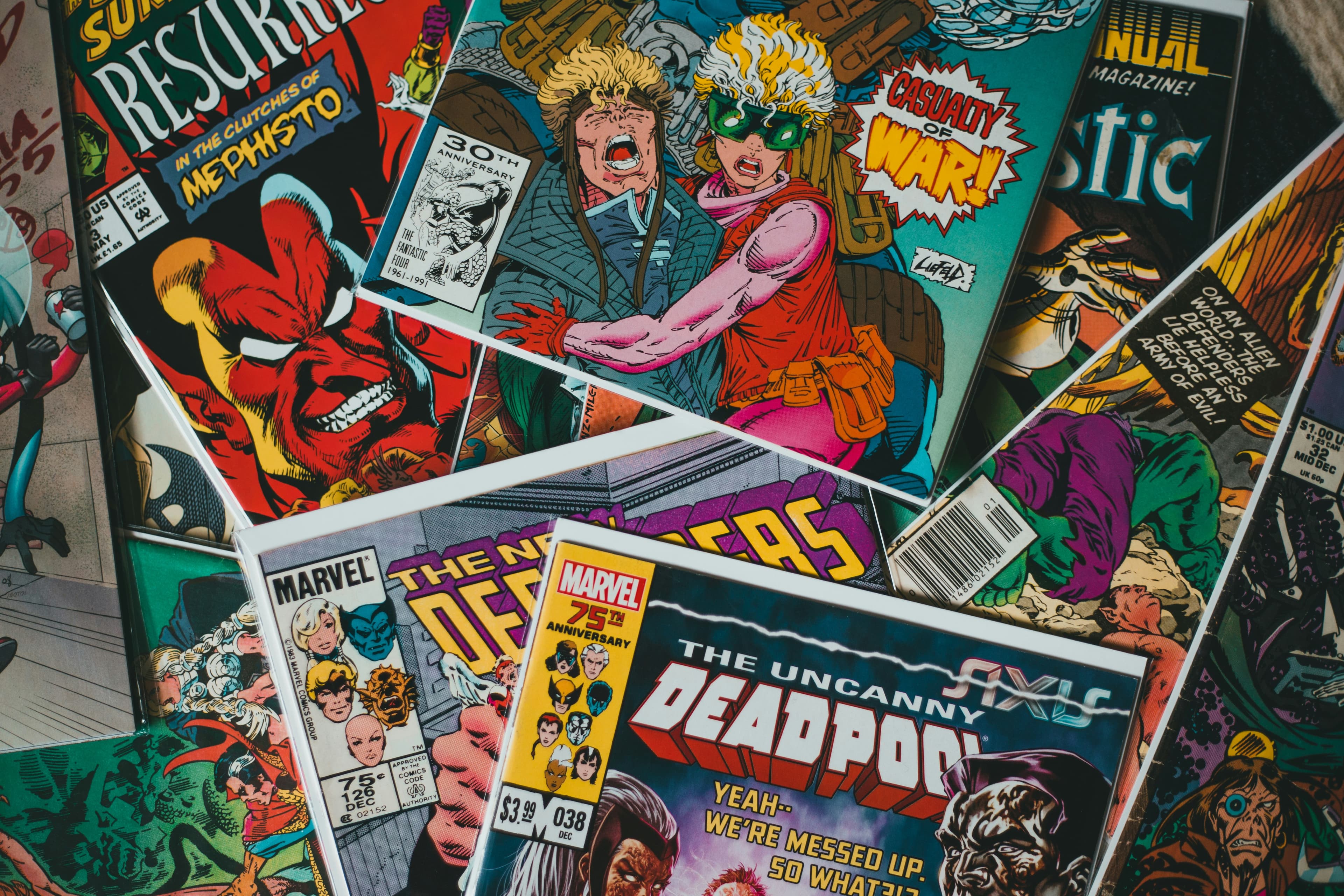
UKIPO uses Spider-Man as an example here. Consumers know the character belongs to Marvel. They would assume any product bearing that name is either made by Marvel or officially licensed by them. That assumed connection is precisely what makes the name protectable.
The EU has confirmed the same logic. The Batman logo was upheld as a valid trademark by the EUIPO specifically because consumers associate it directly with DC Comics, not with the concept of superheroes in general.
The key question: Is this name a badge of origin?
Both the EUIPO and UKIPO frame the central question the same way: will consumers see this name as indicating where a product comes from?
Assessing where a particular character falls on this spectrum requires looking at:
How long has the name been commercially exploited, and by whom?
How consistently has it been controlled by a single rights holder?
Is it used as a brand identifier, or has it entered everyday language with a broader meaning?
Does the public connect it with a specific commercial source?
For most well-known characters with active commercial programmes, Disney, Marvel, Warner Bros., Paramount, and similar studios, the answer strongly favours trademark protection.
Using famous characters in branding: A practical summary
❌ What you generally cannot do without permission
If a character is strongly associated with a single company, like Disney, Marvel, or Warner Bros., you generally cannot use their name or image on products you sell, in your business name, or in your marketing materials. This applies even where the original copyright has expired. Trademark protection operates independently of copyright and does not expire as long as the owner keeps renewing it.
✅ What you may be able to do
Some character names have been used so freely by so many different traders over such a long period that they no longer point to a single brand. For characters like these, there is more room to use the name descriptively, as long as you are genuinely describing something rather than suggesting a commercial connection that does not exist.
Three exceptions worth knowing
Even for well protected characters, both EU and UK law recognise limited situations where use without permission may be permitted.
The first is parody. A genuinely satirical work that comments on the original character is treated differently from one that simply borrows its appeal for commercial gain.
The second is criticism and commentary. Using a character name or image to discuss, review, or analyse the original work is generally permissible, provided it does not go further than necessary.
The third is non-commercial artistic use. Creating artwork that references a famous character for purely artistic purposes, without seeking to benefit commercially from the character's reputation, sits in a different category to selling branded merchandise.
All three exceptions have limits and are assessed case by case. None of them should be treated as a blanket permission without taking legal advice first. When in doubt, submitting your mark for a free trademark check can provide the first step to understand any possible risks.